

Positioning vs Branding vs Marketing
· Oct 13, 2025 · 3 min read
At 4:30 p.m., the meeting table is covered with logo options, colour palettes and a media plan. The campaign is ready to launch, yet nobody in the room can explain why a customer should choose the business.
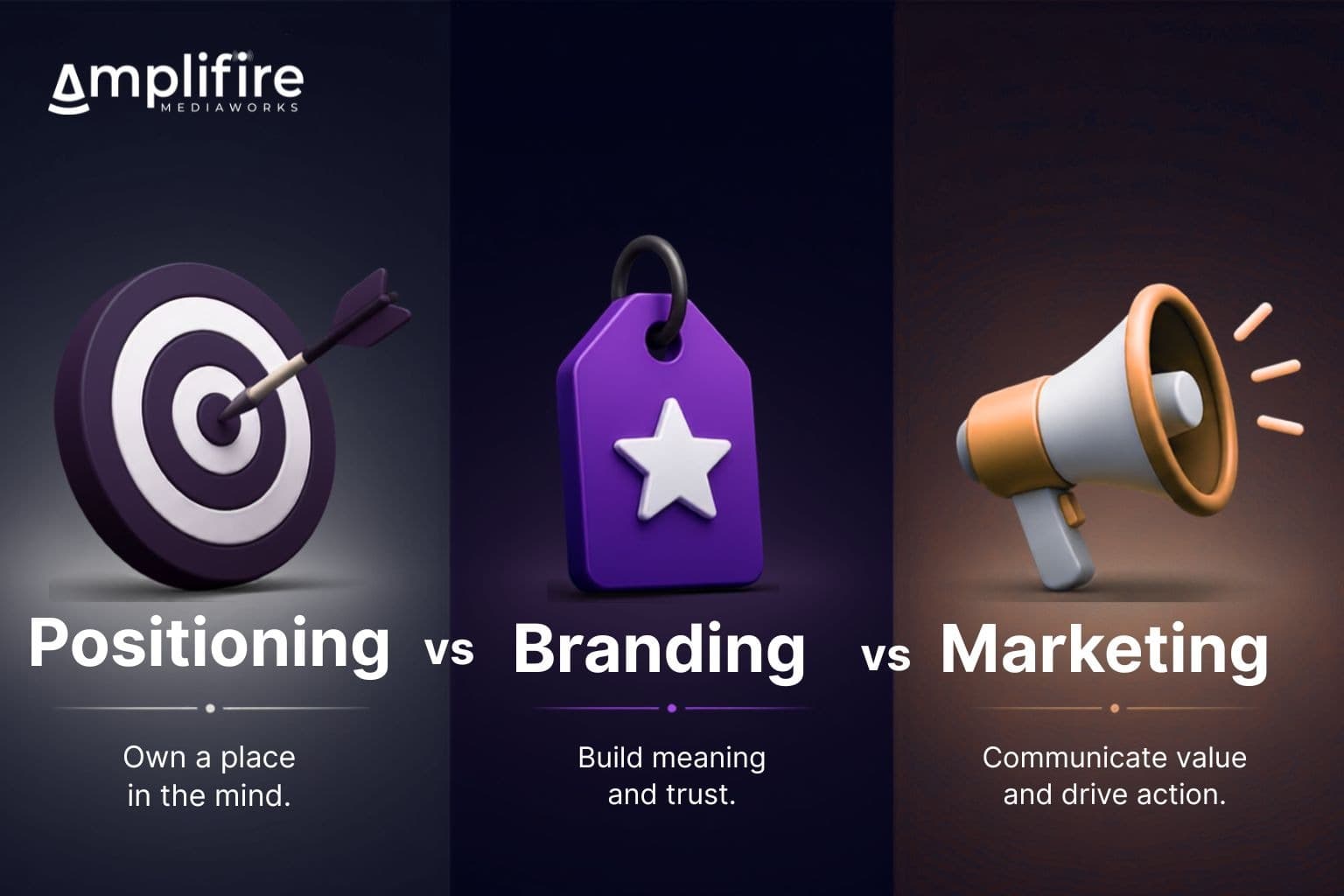
That is an expensive question to leave unanswered. Positioning, branding and marketing are often bundled together. Each has a separate job, and the order shapes everything that follows. Positioning makes the decision Positioning decides who the business serves, the category it belongs in and the reason it deserves to be chosen. It also sets boundaries. A firm seeking recognition for regulatory depth, for example, will weaken that association if it comments on every trending business topic. Clear positioning requires the discipline to leave certain opportunities, messages and audiences to someone else. The decision lives in the customer’s mind. A homepage may describe a company as innovative or full-service, but those labels mean little when twelve competitors use the same words. Strong positioning gives people a specific answer: “Those are the lawyers known for complex infrastructure disputes.” “That is the agency for professionals working in law and finance.” “They build software for independent clinics with fewer than fifty employees.” Once that answer is settled, creative discussions become shorter. The team knows which ideas strengthen the desired association and which ones send the business into another category. Branding makes the decision recognisable Branding gives the position a name, voice and visual form. It includes the logo, typography, colours, language and the feeling created at every point of contact. Good branding helps someone recognise the business before reading the company name. It also gives clients language they can repeat when recommending it to someone else. A sharp visual identity can make weak positioning look expensive for a few weeks. The confusion underneath soon returns. A beautiful logo attached to a vague proposition is still a vague proposition, only now it has custom typography. Marketing carries the message Marketing puts the branded position in front of the people it was created for. Content, advertising, events, email, outreach, SEO and GEO all belong here. Its job is distribution and repetition. When the position is clear, every campaign reinforces the same association from a different angle. When it is vague, the campaign distributes that vagueness across more channels and spends money doing it. A post can earn 300 likes while leaving readers unable to say what the company should be hired for. Activity is easy to measure. Recall is harder, and far more useful. Why the order matters Many businesses begin with a posting calendar or an advertising campaign. Some pause long enough to commission a new identity. The underlying positioning decision remains unresolved. The result often looks busy: five social channels, polished artwork, a new tagline and weekly reports filled with impressions. Ask three team members to describe the company’s strongest reason to be chosen, and three different answers appear. The work should begin with three decisions: Who exactly should choose the business? What category should they place it in? What specific reason should make it the preferred choice? Branding can then turn those answers into a recognisable identity. Marketing can carry that identity to the right audience with enough frequency to build memory. There is a useful test. Ask three clients or colleagues to complete this sentence separately: [Company name] are the ones who __________. If the answers point in different directions, another campaign will probably add to the confusion. Settle that sentence before the designer opens Figma or the media plan receives its first rupee.